In this article:
- Tip of the Month: Pause Before You React
- Meet our staff: Kristie
- Suicide Prevention Month
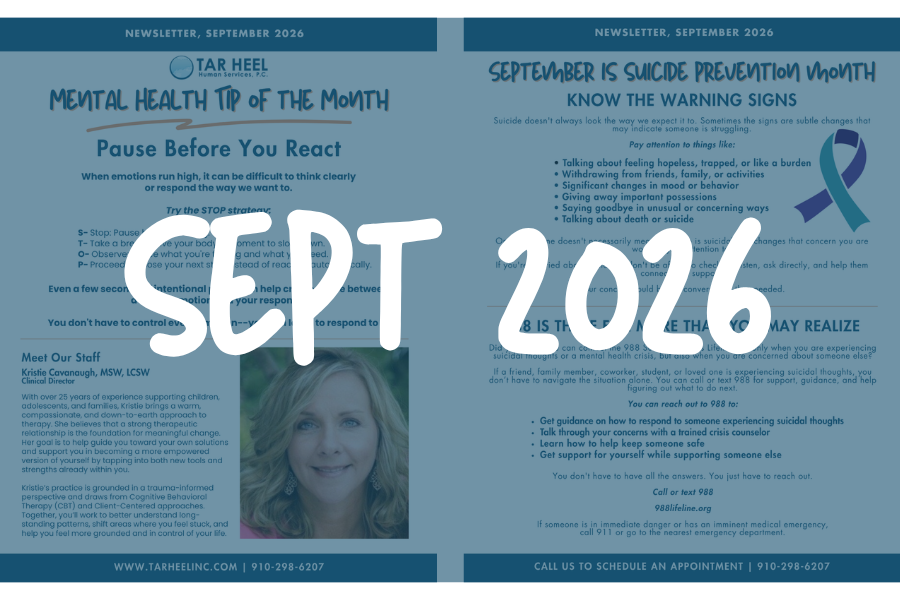
Mental Health Tip of the Month: Pause Before You React
When emotions run high, it can be difficult to think clearly or respond the way we want to.
Try the STOP strategy:
- S- Stop: Pause before reacting.
- T- Take a breath: Give your body a moment to slow down.
- O- Observe: Notice what you're feeling and what you need.
- P- Proceed: Choose your next step instead of reacting automatically.
Even a few seconds of intentional pause can help create space between a strong emotion and your response. You don't have to control every emotion--you can learn to respond to it.
Meet Our Team
Kristie Cavanaugh, MSW, LCSW
Clinical Director & Therapist
With over 25 years of experience supporting children, adolescents, and families, Kristie brings a warm, compassionate, and down-to-earth approach to therapy. She believes that a strong therapeutic relationship is the foundation for meaningful change. Her goal is to help guide you toward your own solutions and support you in becoming a more empowered version of yourself by tapping into both new tools and strengths already within you.
Kristie’s practice is grounded in a trauma-informed perspective and draws from Cognitive Behavioral Therapy (CBT) and Client-Centered approaches. Together, you’ll work to better understand long-standing patterns, shift areas where you feel stuck, and help you feel more grounded and in control of your life.
She’s dedicated her career to working with individuals navigating anxiety, depression, trauma, and substance use. Much of her professional experience has been in private practice, primarily supporting adolescents and adults.
When Kristie isn’t in session, she enjoys spending time with family and friends. When the sun is shining, you’ll likely find her at my favorite place—the beach!

September is Suicide Prevention Month
This month offers a reminder that suicide prevention starts with connection. Sometimes, the most important thing we can do is notice, reach out, and ask the question we may be afraid to ask: “Are you thinking about suicide?”
You don't need to have the perfect words. You don't need to know exactly what to do. You can simply listen, take someone seriously, and help them connect with support.
If you're concerned about someone, you can also call or text 988 for guidance, even if the person at risk isn't you. And if you're struggling yourself, please know that reaching out is not a burden. You deserve support.
Call or text 988: Suicide & Crisis Lifeline If someone is in immediate danger, call 911 or go to the nearest emergency department.
Talking About Suicide Can Feel Uncomfortable
Talking about suicide can feel uncomfortable—but avoiding the conversation can leave someone feeling even more alone. If you’re concerned about someone, you can ask directly: “Are you thinking about suicide?” Asking does not put the idea in someone’s head. It can create an opportunity for honesty, connection, and support. Listen without judgment. Take their feelings seriously. Help them connect with professional support. You don't need to have the perfect words. Sometimes, simply saying “I’m here, and I want to help” can make a difference.
Know the Warning Signs
Suicide doesn't always look the way we expect it to. Sometimes the signs are subtle changes that may indicate someone is struggling.
Pay attention to things like:
- Talking about feeling hopeless, trapped, or like a burden
- Withdrawing from friends, family, or activities
- Significant changes in mood or behavior
- Giving away important possessions
- Saying goodbye in unusual or concerning ways
- Talking about death or suicide
One sign alone doesn't necessarily mean someone is suicidal, but changes that concern you are worth paying attention to.
If you're worried about someone, don't be afraid to check in. Listen, ask directly, and help them connect with support. Your concern could be the conversation they needed.
988 Is Here for More Than You May Realize
Did you know you can contact the 988 Suicide & Crisis Lifeline not only when you are experiencing suicidal thoughts or a mental health crisis, but also when you are concerned about someone else? If a friend, family member, coworker, student, or loved one is experiencing suicidal thoughts, you don’t have to navigate the situation alone.
You can call or text 988 for support, guidance, and help figuring out what to do next.
You can reach out to 988 to:
- Get guidance on how to respond to someone experiencing suicidal thoughts
- Talk through your concerns with a trained crisis counselor
- Learn how to help keep someone safe
- Get support for yourself while supporting someone else
You don't have to have all the answers. You just have to reach out.
Call or text 988
You Don't Have to Have It All Figured Out
When someone is struggling with suicidal thoughts, it can be easy to feel like you need to know exactly what to say or do. You don't.
You can:
- Listen
- Stay present
- Take them seriously
- Ask for help
- Connect them with support
You don't have to be a therapist, counselor, or crisis expert to care about someone. And if you're the person struggling, you don't have to carry it by yourself.
Schedule Your Appointment at Tar Heel Human Services
Our team of dedicated professionals are standing by to assist you. Reach out today to schedule an appointment and start working toward your mental health and wellness goals. We offer both virtual and in-person sessions, along with quick appointments at our Duplin County, NC, office. Whether you're navigating emotional challenges, grief, life transitions, relationship issues, or simply feeling overwhelmed, our licensed therapists are here to support you with compassion, clarity, and care.